
By Nilufar Khudayarova
Researcher, Kurultai Research and Consulting (Tashkent)
Arrival
The first days in Istanbul were filled with light, noise, and an unexpected sense of recognition. Walking through Aksaray, I could hear Uzbek and Kyrgyz words mingling with Turkish, Russian, and Arabic — fragments of home stitched into a foreign city. Yet behind the familiar language lay unfamiliar realities.
My secondment at the Özbek Kadın Hakları Derneği, a small yet vital association supporting migrant women, soon revealed the other side of Istanbul’s cosmopolitan promise. Beneath the glittering skyline, hundreds of Central Asian women live in conditions of uncertainty — domestic workers without contracts, cleaners in hotels, caregivers who rarely rest, women who came chasing opportunity but found themselves bound by silence.
Encounters and Conversations
During my fieldwork, I met women from Samarkand, Andijan, Osh, Bishkek, and Mary — their journeys different, their stories uncannily alike. Many arrived legally, on tourist visas. They found jobs through acquaintances, but legality dissolved when papers expired. From that point on, they entered what one woman called “the shadow life” — a world without protection, where everything depends on the mercy of employers, landlords, and the police.
Several spoke of harassment: an employer’s son entering their room at night; a landlord demanding “extra payments” in exchange for silence; verbal abuse on public transport. Others described subtler forms of control — withheld wages, sudden dismissals, or being told not to appear “too visible.”
Listening to these women, I was reminded of Mine Eder’s concept of “the violence of uncertainty” in her study of female migrant labour in Turkey. She wrote that neoliberal economies depend on migrants’ flexibility while keeping them perpetually insecure — “wanted but not welcome.” The phrase echoed through every conversation.
Precarity and Power
Istanbul’s migration regime is built on contradiction. It invites mobility while punishing overstaying; it celebrates the image of the “hard-working guest” yet denies her rights. The domestic work sector exemplifies this paradox.
As Eder (2015) and others show, post-Soviet women became the backbone of Turkey’s informal care economy after the 1990s. They entered private homes to fill the vacuum left by a shrinking welfare state. Today, Uzbek and Kyrgyz women continue this invisible labour — feeding children, caring for the elderly, sustaining comfort for families they can never fully join.
Their conditions reflect a broader economic logic. Neoliberal reforms turned care into a commodity and migrants into the cheapest suppliers. “We take care of everyone,” one woman told me quietly, “but no one takes care of us.”
Between Fear and Solidarity
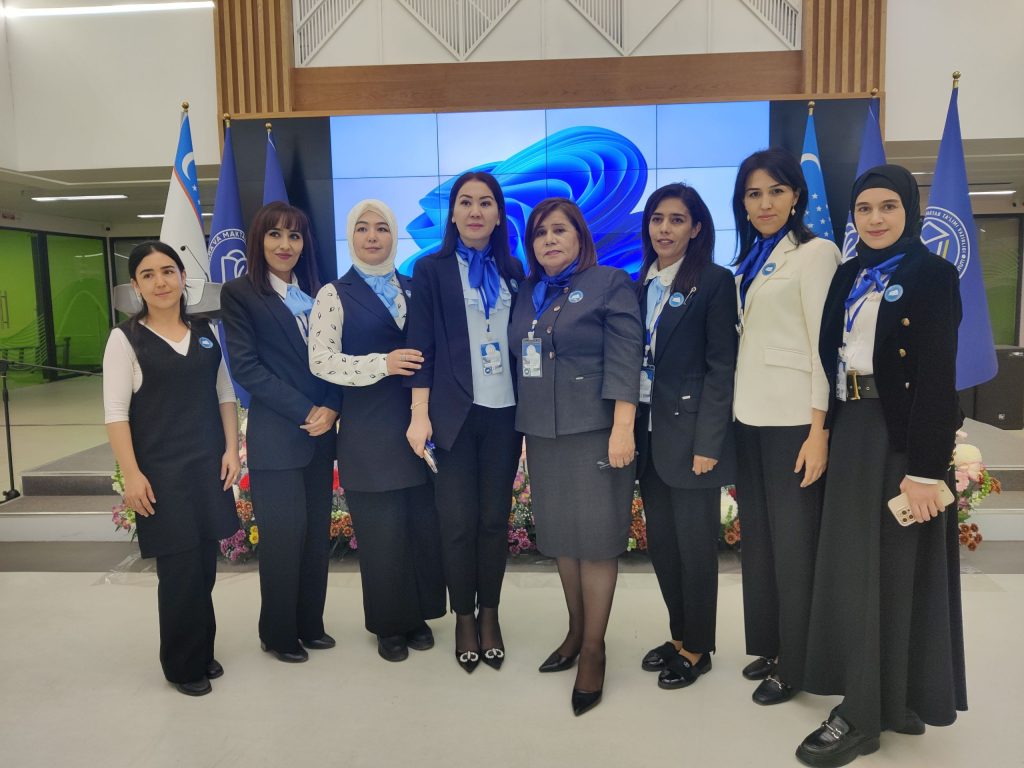
At the Uzbek Women’s Association, I observed how women rebuild forms of protection from below. They organise small language lessons, exchange information about safe employers, and accompany each other to hospitals or police stations. These may seem like modest gestures, but in a city where legal aid is expensive and trust is scarce, they amount to a collective survival mechanism.
Here, gender and migration intersect in complex ways. Women’s vulnerability to exploitation is shaped not only by their irregular status but also by cultural expectations from home: to remain silent, to “avoid shame,” to endure. Some internalise blame for what they experience; others quietly resist through solidarity and small acts of defiance — refusing abusive work, supporting a friend, or simply choosing to speak.
Lucy Williams, Emel Coşkun and Selmin Kaşka (2020) capture this duality well in Women, Migration and Asylum in Turkey: migrant women live “at the threshold between dependence and autonomy,” constantly negotiating dignity within systems designed to overlook them.
Reflections on Doing Fieldwork
For me, this secondment was not only research but confrontation — with privilege, with empathy, with the limits of what observation can achieve. I came as a researcher; I left with an unsettling awareness of complicity. We all benefit, directly or indirectly, from invisible labour.
Working alongside the women of the Özbek Kadın Hakları Derneği showed me that migration governance is not simply written in law books. It is enacted in kitchens, stairwells, and narrow apartments — where legality, morality, and survival intertwine.
In academic language, we call this vernacular governance; in lived experience, it is simply life.
After Istanbul
As I return to Tashkent, I carry the voices of those women with me — not as data but as reminders. Their stories illuminate the need for deeper cooperation between Central Asian and Turkish institutions: legal counselling, labour rights awareness, and safe-migration channels designed with gender sensitivity.
But perhaps more importantly, they demand that we, as scholars, listen differently — not as observers of “migrant vulnerability” but as witnesses to endurance, creativity, and quiet resistance.
In Istanbul, I learned that invisibility is never total. Even in the margins, women find ways to be seen — and to see each other.
References
- Eder, M. (2015). “Turkey’s Neoliberal Transformation and Changing Migration Regime: The Case of Female Migrant Workers.” In Social Transformation and Migration, Palgrave Macmillan.
- Williams, L., Coşkun, E., & Kaşka, S. (eds.) (2020). Women, Migration and Asylum in Turkey: Developing Gender-Sensitivity in Migration Research, Policy and Practice. Palgrave Macmillan.
